

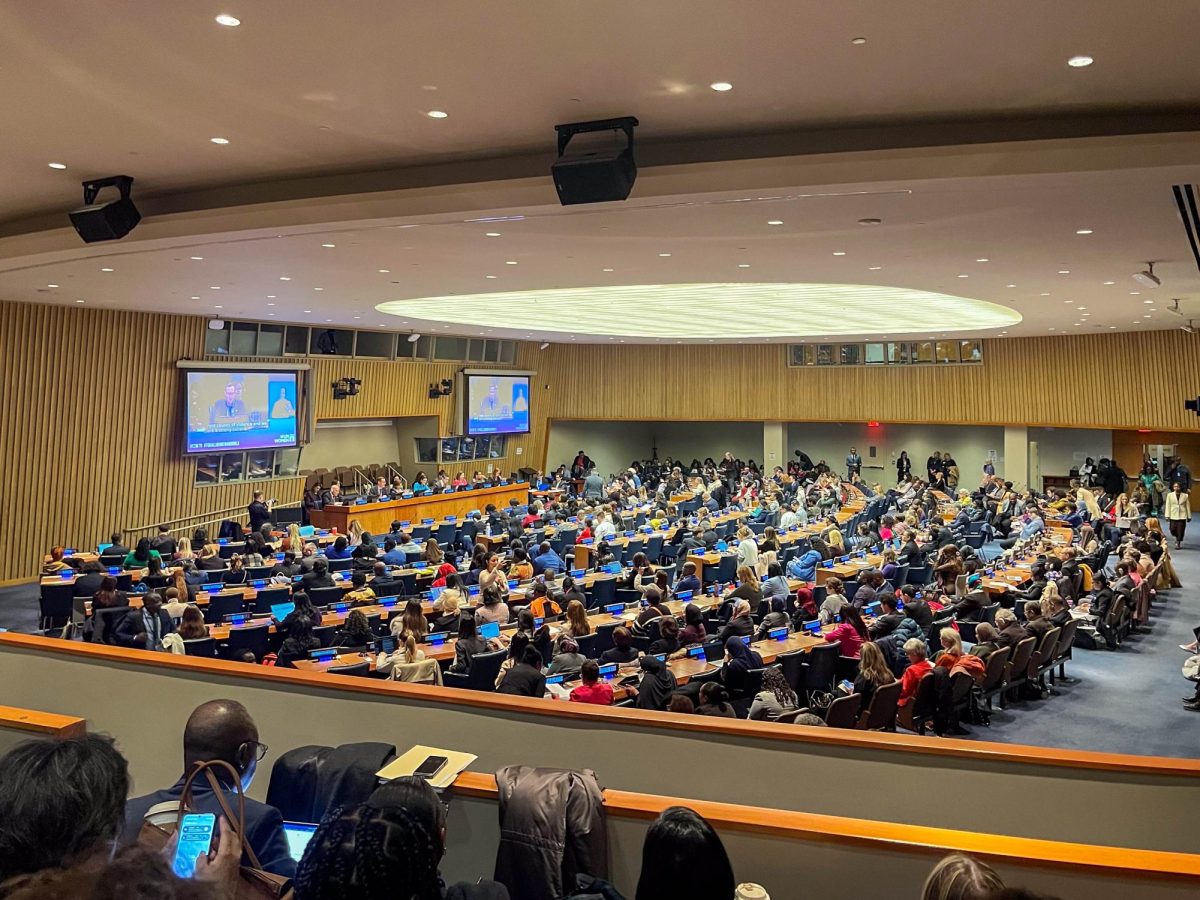
The 70th annual Commission on the Status of Women (CSW70) conference was held from March 9 through 19 at the United Nations (UN) Headquarters. Individuals and organizations from around the globe traveled to New York City to attend the conference, eager to share personal experiences and discuss plans of action to combat gender inequalities still present.
Ventura County and Foothill Technology High School were represented at this worldwide event through attendees such as Youth Right to Rise, a local student-led organization working under the nonprofit Mariposa Advocacy and Legal Services.
Sessions hosted by representatives from hundreds of countries all explored diverse and prevalent topics surrounding women’s rights. According to CSW70, the central theme of the conference was “ensuring and strengthening access to justice for all women and girls, including by promoting inclusive and equitable legal systems, eliminating discriminatory laws, policies and practices and addressing structural barriers.”
The Bureau of 2026, chosen by the previous year’s representatives, took the lead in addressing these issues. The Bureau consisted of Maritza Chan Valverde (Costa Rica), Chair (Latin American and Caribbean States Group); Samah Dbouk (Lebanon), Vice-Chair (Asia and Pacific States Group); Noah Oehri (Liechtenstein), Vice-Chair (Western European and Other States Group); Andreea Mocanu (Romania), Vice-Chair (Eastern European States Group); and Flavia Umulisa (Rwanda), Vice-Chair (African States Group).
The role of the Chair position is to lead official meetings and to ensure an overall conclusion is reached, while the role of the Vice-Chairs is to support the Chairs and represent different regional groups.
While the Bureau hosted the main events and discussions, many side and parallel sessions took place with other influential figures.
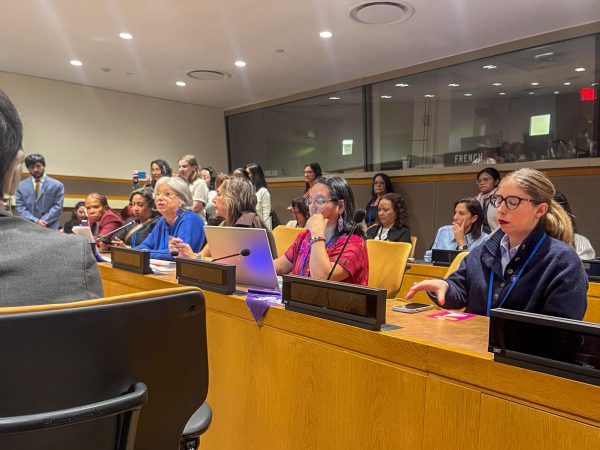
A common rhetoric heard in both the main and side sessions was the sentiment of “analyze and not immediately react.”
Many sessions stressed the idea of garnering data and taking evidence-based approaches to inequalities regarding women’s rights, achieving the best outcome when actually discussing policies at an international level. However, this doesn’t necessarily mean taking time to gather more evidence; countless causes already have an abundance of evidence ready to make a change.
What is needed is the organization and analysis of the sources already available to create strong arguments and influence policies.
The main session on March 12 touched on the topic of violence against women and girls, where representatives explained what their countries are doing to combat this issue. The Beijing Declaration — an agreement committed to accelerating gender equality in multiple facets during the Fourth World Conference on Women in 1995 — was brought up, leading to an agreed conclusion by the Bureau to reaffirm the declaration.
Violence in the physical world, however, was not the only type covered. In a parallel event about digital violence against women and girls, Colombian representative Arlene B. Tickner stated that “75 percent of women report suffering some type of digital violence, 75 percent of victims also report experiencing gender-based violence in real life, as well showing the link between the two forms of violence.”
Monica Javier, a representative from Uruguay, responded by highlighting the obligations for states and companies to close the digital gender gap within cultural rights and communal unity.
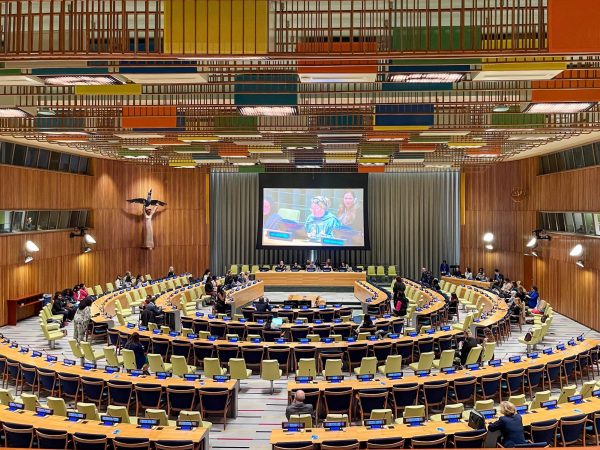
While the main and parallel events in the main UN headquarters building were surely impactful, side events taking place in the UN Plaza, although smaller, were equally powerful. Mu Sochua, the former Minister and Parliamentarian of Cambodia, spoke at a session regarding inclusive governance about her experience with structural barriers in education.
Another powerful side discussion in the UN Plaza’s Church Center was on police brutality and ICE violence against black and brown women.
Speaking at this session was Tamara Jackson, who owns and operates a therapy and consulting center. When asked about her opinion on the most prevalent issues, Jackson stated, “We no longer have autonomy over our bodies. No matter what one’s belief is, that choice is still being taken away.” She said, “What can we do? We need to focus on prevention.” Prevention in the form of evidence-based approaches that will ultimately lead to justice.
This event was closely aligned with Youth Right to Rise’s work, addressing key issues related to recent ICE activity and targeting.
Reverend Dr. Andrea Vassell stressed the importance of the participation of young activists, saying that, “As activists, we are often swimming against the current of what was placed in our minds at an early age.”
The UN’s 70th CSW conference brought together nations to discuss critical issues affecting women, and while the realities of some topics were upsetting, the agreed-upon conclusions underscore the importance of unity and understanding.
Through carrying on this tradition over many years, representatives from all over the world have successfully been able to implement progressive and sustainable solutions to gender-related inequalities. The future of women’s rights only seems brighter after seeing the community built through this event.















Kim Marra Stephenson • Mar 24, 2026 at 3:27 pm
Great reporting, Audrey! The Ventura County Women’s Forum Collaborative was happy to have your voice in our delegation to CSW70, and even happier to see you carrying on the work.