Seventy-seven percent of high school students are sleep-deprived and do not receive the recommended eight to 10 hours of rest per day (CDC). Dragons at Foothill Technology High School are among those whose academic performance is impacted by whether or not they are gaining adequate sleep, which depends on consistency, quality and amount.
Countless students sacrifice their sleep, believing that studying for “just one more hour” will get them that A. In reality, they are surrendering precious downtime that the brain needs to perform well during class. Not only are students left impaired academically, but they are also physically and mentally drained.
Brain strength and retention
According to the Cleveland Clinic, there are three stages in non-rapid eye movement (NREM) sleep, the portion of the sleep cycle that helps to restore physical and mentally.
The brain undergoes systems consolidation in the third and deepest stage. Brain systems consolidation is a process that relocates memories from the hippocampus to the neocortex for long-term storage.
“A reduction in sleep does not occur independently of the effects on memory, attention, alertness, judgment, decision-making and overall cognitive abilities in the brain, resulting in decreased function and impaired cognitive performance,” PubMed Central (PMC) said.
When students do not receive adequate sleep, their brains are prevented from reaching sufficient amounts of systems consolidation and their academic performance decreases due to a lack of retained information.
Consistency over “catching up”
Adequate sleep not only depends on the quality and amount that students receive, but also on consistency. Students are often unsuccessful in attempting to “catch up” with sleep on the weekends after a school week full of late nights.
This is because of circadian misalignment — when a part of the brain called the suprachiasmatic nucleus (SCN), which functions as the body’s master internal clock, becomes inconsistent with the external clock that includes environmental and behavioral factors.
“Staying up late, sleeping in on weekends or frequently changing your bedtime can confuse your [master internal] clock and make it harder to fall asleep or wake up consistently,” the Sleep Foundation said.
Instead of compensating for “lost” time, inconsistent sleep between school nights and weekends can worsen performance; sleep regularity is the more dependable factor of receiving a desired Grade Point Average (GPA) rather than the total amount of sleep attained.

“Tired but wired” versus long-term effects
According to the University of California, Los Angeles Health (UCLA Health), the hypothalamic-pituitary-adrenal (HPA) axis is the body’s stress response system. It overproduces hormones when sleep-deprived, specifically cortisol and adrenaline, as a response to insufficient rest.
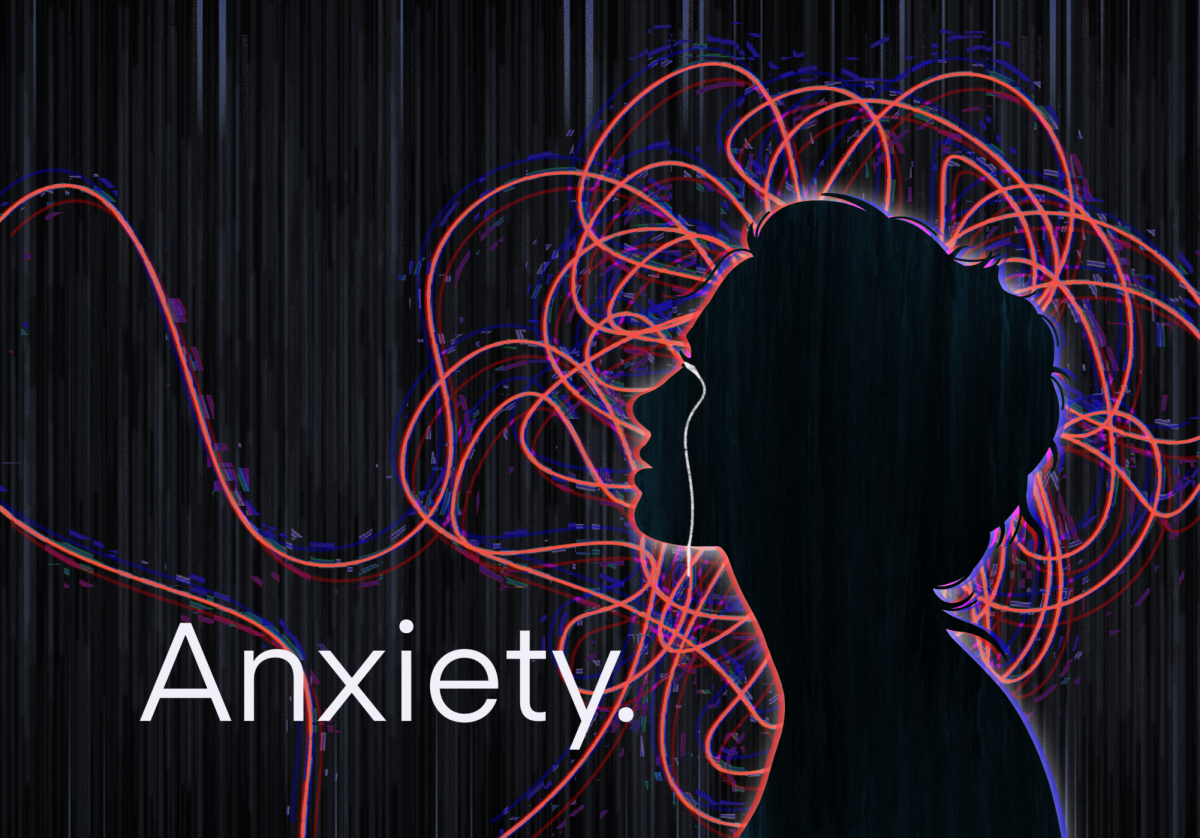
This results in an effect known as “tired but wired,” occurring when the body becomes physically drained but the brain is anxious with nervous energy. It is a temporary alertness that disguises exhaustion, resulting in heightened anxiety, irritability and emotional instability.
“Between 50–90 [percent] of American high school students are chronically sleep-deprived,” the PMC said.
Long-term health risks are produced by chronic activation of the HPA axis’s stress response, including a weakened immune system and issues relating to anxiety.
A sufficient conclusion
When a sufficient amount of sleep is unattainable, an effective way to boost energy in the short-term is to take brief power naps. They serve to energize and mentally reset without entering deep sleep. Students can oppose sleep deprivation, increase memory retention and improve alertness through short power naps, but these are only temporary benefits.
The good news is that sleep deprivation can be reversed through lifestyle changes: maintaining stable sleep schedules by gaining consistent sleep, limiting screen time in the evening and decreasing caffeine intake before bed.
Students may continue to strive for that A through never-ending sleepless nights, but that A is also possible through wholesome habits. Sleep sufficiency can be improved; however, the renewal time depends on the amount of “debt” acquired.