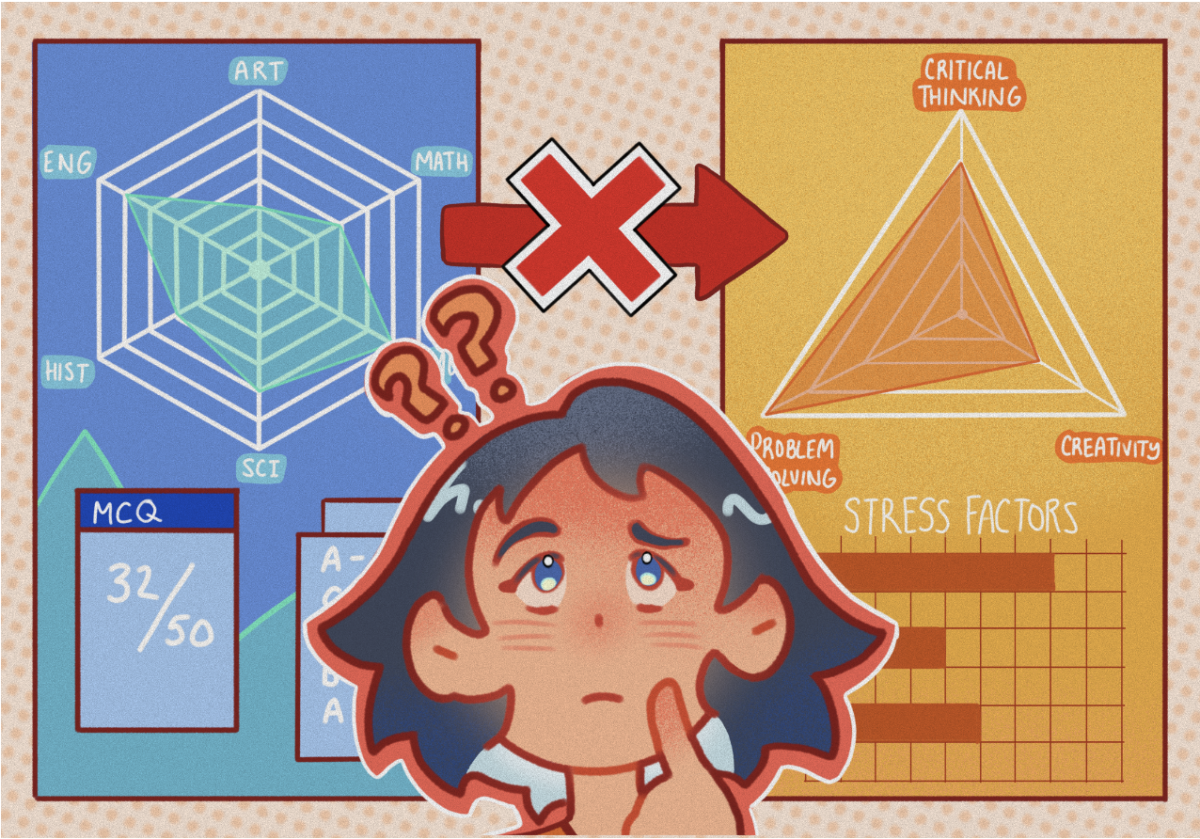
A low A? A high B? For many academically driven students, the gap between the two can feel as vast as the ocean. Academic expectations are constantly imposed and reinforced; however, their effects often go deeper than they appear on the surface. When expectations are too low, students may fall short of their true potential. On the other hand, excessively high expectations can lead to burnout and a sense of failure when receiving anything less than a perfect “100 percent.”
An undeniable, influential force shaping students’ expectations is their guardians. According to Oxford Languages, expectations are defined as “a strong belief that something will happen or be the case in the future.” When guardians instill beliefs in adolescents about the importance of education, those ideas inevitably shape how students perceive school and their own performance.
While many of these expectations often are implemented at home, the ideas don’t stay there — they show up in how students talk about their own performance and frame their overall attitude toward school.
“I don’t care if it is a D-, a C+ or a B+; if I don’t have a 90 or above, I [feel] like I’m failing myself from what I can truly achieve,” an anonymous student at Foothill Technology High School said.
Conversely, another anonymous Foothill Tech student emphasized their distaste for school as a whole. “I don’t even really learn that much, usually by noon I’m ready to go home,” they said.
These contrasting perspectives highlight how expectations can influence students in very different ways. For some, high standards create internal pressure to constantly perform at their peak, often tying their self-worth to their grades. For others, a lack of engagement or lower expectations can lead to disinterest and detachment from school altogether.
A lot of toxicity in schooling traces back to how the school system is structured. Grades end up being treated as the end goal instead of just one part of the learning process, which shifts the focus toward a mark on a paper over understanding. When the infamous grade inflation is addressed as well, the baseline for what counts as “good” vastly shifts, making higher grades more common and causing students to feel like they need to achieve even more to exceed and succeed. What might have stood out as outstanding before starts to feel mediocre, and suddenly, students are chasing implausible perfection.
At the end of the day, it’s all about finding the right balance. Expectations can drive students to reach their potential, but when taken too far, they can lead to stress and burnout. Prioritizing growth, effort and genuine understanding over perfection allows students to cultivate confidence and self-discovery, where the sky’s the limit.