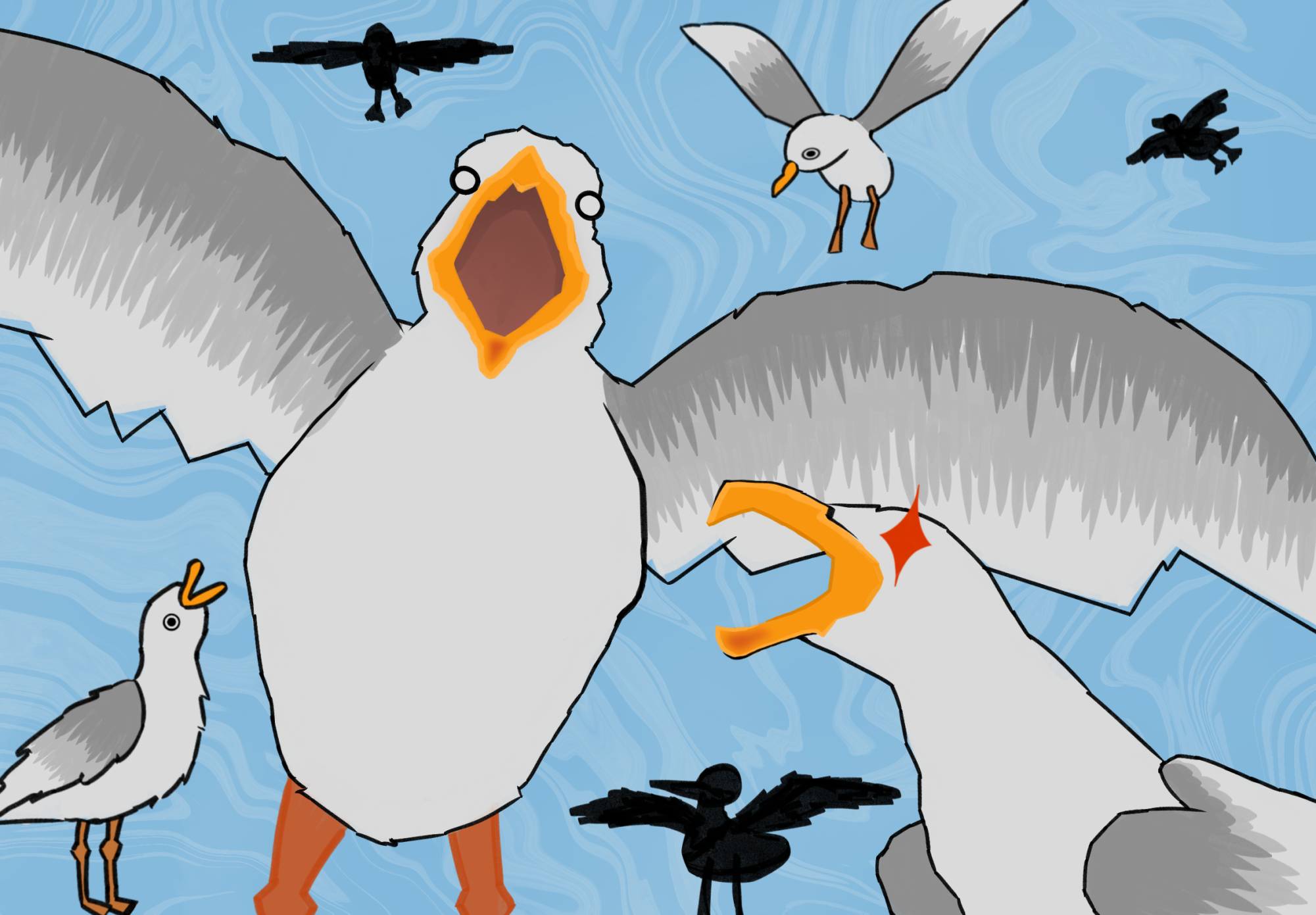
Five minutes before the lunch bell rings, they arrive.
First one. Then three. They line the roof overlooking the grassy quad at Foothill Technology High School (Foothill Tech): 14 seagulls on the H building, 20 on the E building. A few circle the sky, waiting for the right moment to strike.
The melodic lunch bell sounds and it begins.
It’s every bird for themselves.
Three seagulls tear into a slice of pizza that sits in a cardboard lunch tray, splitting it in three directions, cawing until one finally backs down. Two dig through the trash cans until they hit the neon-yellow, cheese-covered jackpot: nachos. Forcing the circular chips full down their throats, they abandon the wreckage and move to the tables, where one gull suffocates on a bag of sliced apples just to get a taste.
By the time every student has shuffled off to class, the gulls abandon the quad, disappearing almost as quickly as they arrived.
Like many urban animals, seagulls have learned to adapt to human routines. But this adaptation is changing the Western gull’s diet, reinforcing aggressive behaviors and creating issues that are starting to spread beyond its species.
Studies of gull populations in California estimate that adult gulls get somewhere between 63 percent and 82 percent of their diet from garbage. Even young chicks have been observed to be raised on diets made up of as much as 72 percent discarded human food.
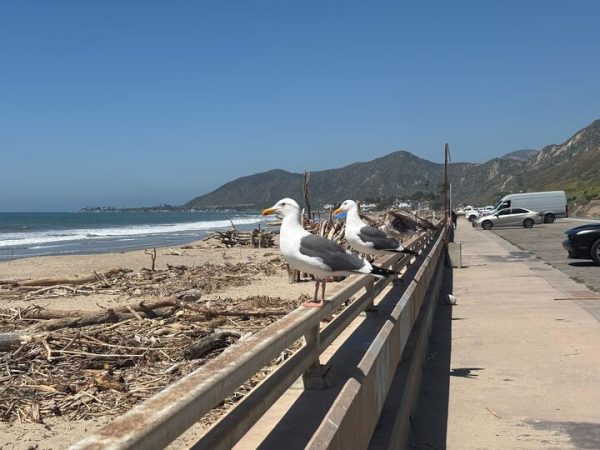
Plastic, cardboard and other trash materials standing between a gull and its bag of chips, or any other snack, can cause serious health issues. A study on seabirds in the California Current found that plastic and other debris can obstruct or damage digestive tracts, reduce stomach capacity and create a false sense of fullness, leaving birds undernourished.
Even if the gradual harm being done to the gulls is easy enough to overlook, these interactions affect humans, too.
According to a warning poster made by the American Bird Conservancy (ABC), feeding gulls simply makes them more aggressive. Every time a gull begins to associate food with people, that behavior is reinforced, making the birds more likely to approach people and steal food.
At Foothill Tech, three in five students admit to leaving behind food or food trash after lunch or break. Additionally, nine out of 10 trash cans on campus are not covered, and even the ones that are have narrow openings that gulls can easily peck from when the cans are particularly full.
These issues are simply the result of small mistakes, but ultimately, if students continue to leave food out in the open, the behavior will continue.
Beyond human-gull interactions, the effects of gulls eating human food have spread into the lives of other bird species. By indirectly feeding seagulls so much over the years, their population has increased unnaturally.
The ABC says, “Gulls eat the eggs and young of other birds … When people feed gulls, their numbers steadily increase until they become a threat to people and other nesting bird species.”
With the rush of getting to class on time and the distractions of friends, the priority of disposing of trash may not seem essential to students of Foothill Tech, but these small neglects train seagulls and reinforce an aggressive behavior that is hurting the coastal environment over time. For the sake of the coastal ecosystem, this responsibility needs to be shouldered by humans, starting directly with the flaw in the management of trash at Foothill Tech.