Introducing the heart of the matter
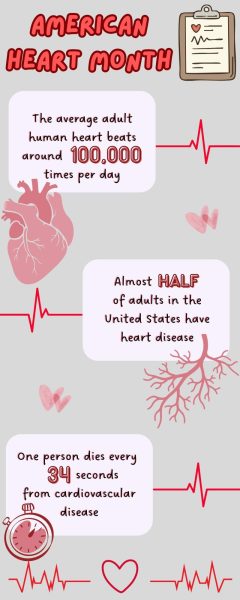
The American Heart Association (AHA) stated that heart disease has been the primary cause of death among both men and women in the United States for over a century. American Heart Month, first observed in February 1964, was established by heart attack survivor President Lyndon B. Johnson to draw attention to cardiovascular disease. In 2026, awareness continues to be raised, but what exactly is heart disease?
According to the Cleveland Clinic, heart disease is a term used to represent a range of issues that impact cardiovascular health. This includes coronary artery disease, arrhythmias, heart valve diseases, cardiomyopathy, heart failure, congenital heart disease and pericardial issues. These conditions can be inherited or acquired over time, affecting the heart and blood vessels throughout the body. When the heart is not functioning properly, it does not send sufficient amounts of blood, oxygen and nutrients — this can lead to stroke, kidney disease, high blood pressure and other related heart complications.
American Heart Month encourages people to “know their numbers”
Each year, around 805,000 people in the U.S. have a heart attack, according to the U.S. Centers for Disease Control and Prevention (CDC); for 75 percent of those people, it is their first heart attack, and the other 25 percent are those who have previously had a heart attack.
Even though cardiovascular health should be tracked year-round, February especially raises America’s awareness. One major goal of American Heart Month is to educate people on cardiovascular disease symptoms and risks.
“The first symptoms of heart disease include chest pain, shortness of breath, swelling in your legs, fatigue and dizziness/fainting,” the Cleveland Clinic said.
The AHA prompts people to monitor their blood sugar, blood pressure and cholesterol to catch early signs of heart disease, as symptoms can vary depending on what complications they might have.
Practicing a hearty tempo in February
Not only does American Heart Month aim to educate people about the risk of heart disease, but it also serves as a reminder of ways to help prevent these issues.
“Cessation of tobacco use, reduction of salt in the diet, eating more fruit and vegetables, regular physical activity and avoiding harmful use of alcohol have been shown to reduce the risk of cardiovascular disease,” the World Health Organization (WHO) said.
According to the Mayo Clinic, sleep and stress also play essential roles in heart health. When it comes to rest, quality is just as important as quantity. Obstructive sleep apnea — a sleeping disorder where breathing frequently stops/starts — is an example of an issue that can increase the risk of cardiovascular disease. Anxiety contributes to higher blood pressure and less blood flow to the heart, factoring into heart health as well.
Syncing rhythm and getting involved
Feb. 6, 2026, was “National Wear Red Day,” held on the first Friday of every February to draw focus to cardiovascular disease, specifically in women, as it affects them differently than men. According to University Hospitals (UH), symptoms of cardiovascular disease are minimal or masked in women, leading to their misdiagnosis.
Besides wearing red on this national day, people are encouraged to learn hands-only cardiopulmonary resuscitation (CPR), an emergency procedure that is used on people whose breathing or heartbeat has stopped.
The simplified steps for hands-only CPR consist of dialing 911 and pushing hard/fast in the center of the chest. Why is this important?
“In the United States, someone has a heart attack every 40 seconds,” the CDC said.
Hands-only CPR allows bystanders to immediately perform a life-saving emergency procedure on someone undergoing cardiac arrest. This keeps oxygenated blood flowing to the brain and can double or triple a victim’s probability of survival. According to the AHA, less than half of the people who experience cardiac arrest outside of a hospital are given CPR, mainly because of a lack of knowledge as to how it is properly performed.
A healthy conclusion
Heart age is someone’s cardiovascular risk based on the wear and tear on their heart and blood vessels. Unlike lifespan, heart age can be rewound by switching to a healthier diet, consistently exercising and handling stress. This month is a reminder to not only be aware of existing heart issues, but to help prevent cardiovascular disease and become involved throughout February. Prioritizing a younger heart is not just for the 28 days of American Heart Month; it is the time to reset the clock.