Zara Larsson sings, “I live my day as if there was no past” — except there is one, and apparently it’s 2016.
Somehow, oversaturated filters, Instagram, “Stranger Things” and pop songs we never asked to hear again have reappeared on social media under the slogan, “2026 is the new 2016”.
According to ABC News, within the first two weeks of 2026, “the #2016 hashtag [was] used in over one million posts on TikTok and over 37 million posts on Instagram.”
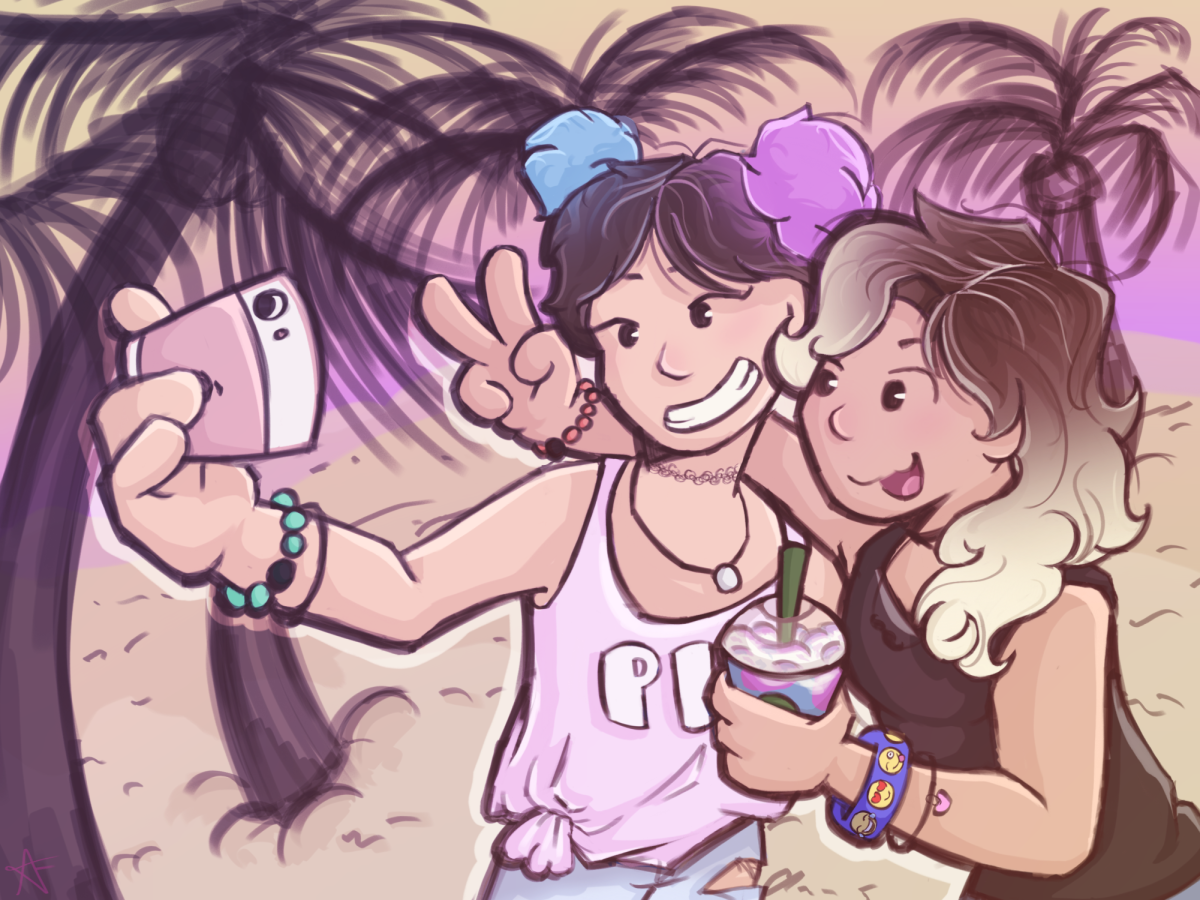
The irony of this throwback is that the people participating in this trend, mostly Gen Z and Millennials, weren’t the ones checking the news and understanding the political climate in 2016. They were at home watching vines, keeping Snapchat streaks alive and dancing to Musical.ly with their friends; young and blissfully unaware.
Romanticizing 2016 requires selective memory. While the vibrant and nostalgic aspects are being resurfaced, the time was heavily marked by political shock, global fear and the growing realization that things were beginning to shift in unsettling ways. Tensions surrounded the U.S. presidential election, and repeated terror attacks occurred across Europe and the U.S.
The Guardian, in an article titled “So long, 2016: the year of the political earthquake,” said, “There was nothing magical or inexplicable about 2016. We were merely reminded of what happens when most of us do not have enough money, and a few of us have much too much.”
The New York Times even went so far as to call 2016 “the worst year ever” in an opinion piece written by Charles Nevin.
“After the sh*t show 2025 was, I’m not surprised that people are nostalgic for 2016 and how easy we had it. 2025 was hell to survive (especially politically), so it would make sense that a lot of us would want to revisit old years to forget the tragedy that was 2025,” user Killa_J posted on Reddit.
Now that the people who were blissfully unaware in 2016 are old enough to understand the headlines, ignoring them feels a lot harder. Instead of adjusting to that awareness, they have chosen to engross themselves in dancing to Lush Life by Zara Larsson online and posting compilations of pictures they took in 2016 that remind them of a time when they didn’t have to worry.
For a lot of people, 2016 wasn’t simpler — they were. This wave of 2016 nostalgia doesn’t come from the year itself but rather exhaustion with the present. The danger is that once escaping backward becomes a habit, the present stops feeling worth fixing. It’s easier to scroll through memories than to confront what’s broken now, and easier to recycle a past we survived than to imagine a future we actually have to build. Nostalgia might feel harmless, but standing still is how nothing changes.