For years, the backbones of political campaigns consisted of physical distribution methods, reaching supporters through newspapers and canvassing. However, the increased use of social media now allows candidates and voters to have a direct line of communication and reach wider audiences.
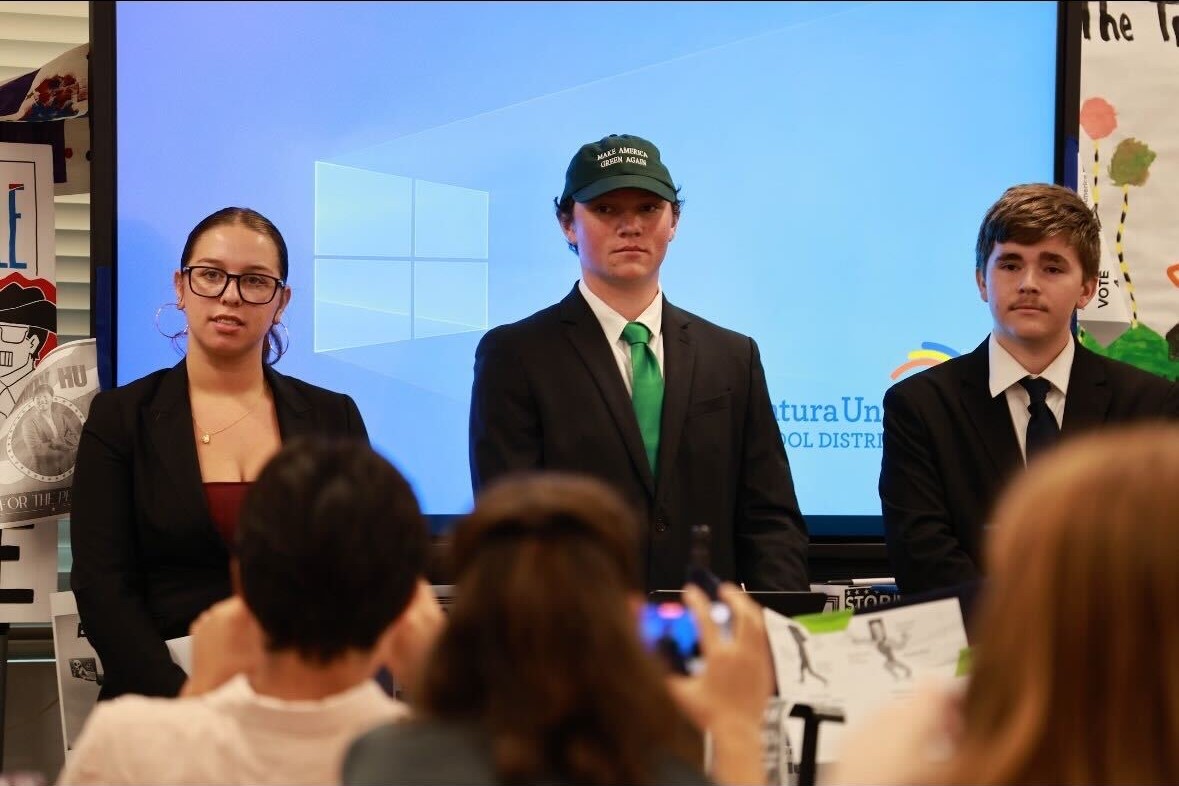
In Foothill Technology High School’s most recent student government class elections, the influence of social media in the campaigns of the candidates is growing ever more clear with the rise of technology usage. Fueling their platforms, candidates use social media to share ideas, respond to opponents and promote their campaigns in ways that mirror modern political strategies, used by real-world politicians to reach audiences in the far corners of the internet. While these platforms offer accessibility and efficiency, they also raise questions about credibility, tone and oversight.
“If used correctly, social media can be a great way to inform people who don’t have access to news outlets, but the thing is that social media needs to be very well monitored, and it needs to have a standard of seriousness, especially in politics.” Fiona Aulenta ‘26, a candidate in the recent student gov. elections for the Republican party, said.
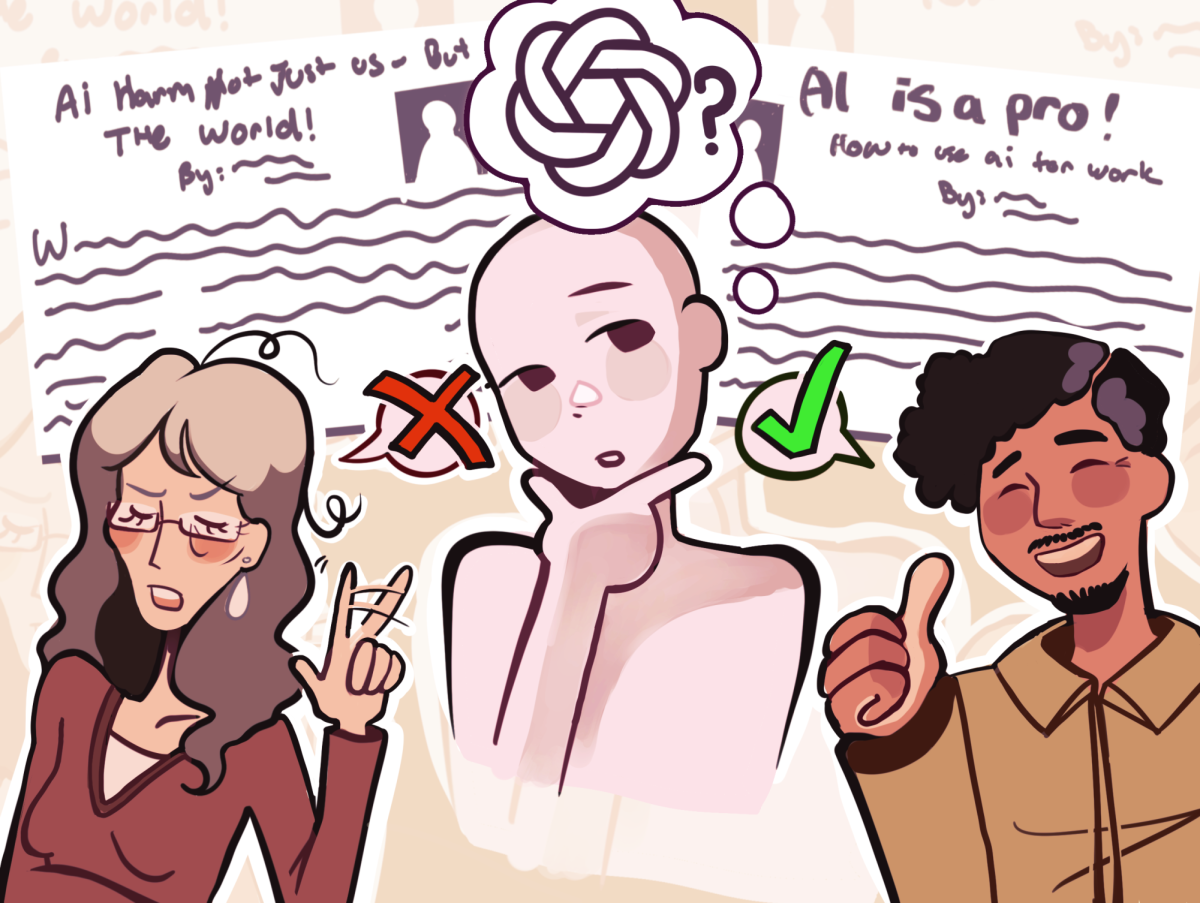
While social media can draw both positive and negative effects when used in political campaigns, the rise of artificial intelligence (AI) has completely changed the game. The presence of AI in social media is almost unavoidable in modern times, and this newfound resource for creation can entail many dangerous possibilities.
In the student gov. elections, AI was widely used in online campaign materials and, in some cases, to criticize, undermine or even tarnish the reputations of opponents. Although AI tools allow for fast content production, critics argue that they can oversimplify political discourse or shift focus away from substantive policy discussions.
“We should bring back more well-thought-out, deeper political cartoons because the ones that are created by AI, I think, are shallow and are less of an attack on the other person. It’s just throwing mud, it’s just insults, and I don’t think that AI is helping the campaigning process become more holistic or more democratic,” Cynthia Hu ‘26, a democratic candidate for the student gov. elections, said.
“It can be very dehumanizing. I’ll say that from things that I’ve seen online personally from what we use in our actual campaigns,” Makenzie Gamble ‘26, a candidate for the Bull Moose Party in the student gov. elections, said.
“If you’re trying to show yourself as a truthful person, especially in politics, you never want to present yourself with AI as it is the number one deceiver on the internet,” Aulenta said.
The age demographic of viewers has a significant impact on the reception of political campaigns on social media as well. Younger users such as Gen Z and Gen Alpha—who are the most prominently online—are viewing politics and entertainment in the same place, along with AI. The mixing of these two concepts can have dangerous effects, especially when the next generation of voters is the one dominantly consuming it. The echo chamber that social media is has the power to spread false news faster than wildfire, and politicians can use this to their advantage to sabotage the other side. In the student gov. elections, and in real political campaigns, it has become normalized for candidates to post jabs at their opponents to gain the approval of voters and damage the reputation of their competition.
“Social media is where you can kind of nitpick where you did well, or where someone else faulted.” Alex Ramirez ‘26, a Republican party candidate in the student gov. elections, said.
Even things like endorsements by popular celebrities and influential figures can be faked and spread across social media platforms with ease. According to AP News, in 2024, “He [Donald Trump] reposted an [AI-generated] image of Taylor Swift in an Uncle Sam outfit and accepted her endorsement for his campaign, which she had never given.” This post misinformed many, as Swift herself was not actually a supporter of Trump, but this image was able to quickly spread a false narrative.
“Misinformation spreads very quickly on social media, and things like outrage and scandals and things … where candidates are attacking each other’s character rather than their actual policy, that gets a lot of attention, rather than the nuance of their respective policies, and I think that is something that is unfortunate but cannot be avoided,” Hu said.
In the most recent New York City, N.Y., mayoral election cycle, figures like Zohran Mamdani demonstrated how online platforms can shape public perception far beyond traditional campaigning. Mamdani, known for his progressive platform and outspoken presence online, often went viral for short clips of speeches and interviews. However, many of these clips were reposted without context, sometimes edited or captioned in misleading ways. Opponents and commentators used these posts to portray as extreme or unrealistic, even when the full statements reflected more nuanced policy goals.
As these clips spread across platforms like X and Instagram, they often reached far more voters than traditional news coverage. This created a situation where public perception of Mamdani was shaped less by his full policy proposals and more by viral moments on social media. While his campaign benefited from increased visibility and engagement among younger voters, it serves to show how easily modern political campaigns can be defined by discourse and people hidden behind their screens.
As social media continues to reshape political campaigning—both in schools and beyond—the role of technology is forever changing. While it offers an abundance of access and engagement, it also presents many challenges. The growing influence of social media on society raises questions about how future campaigns will balance innovation and integrity.