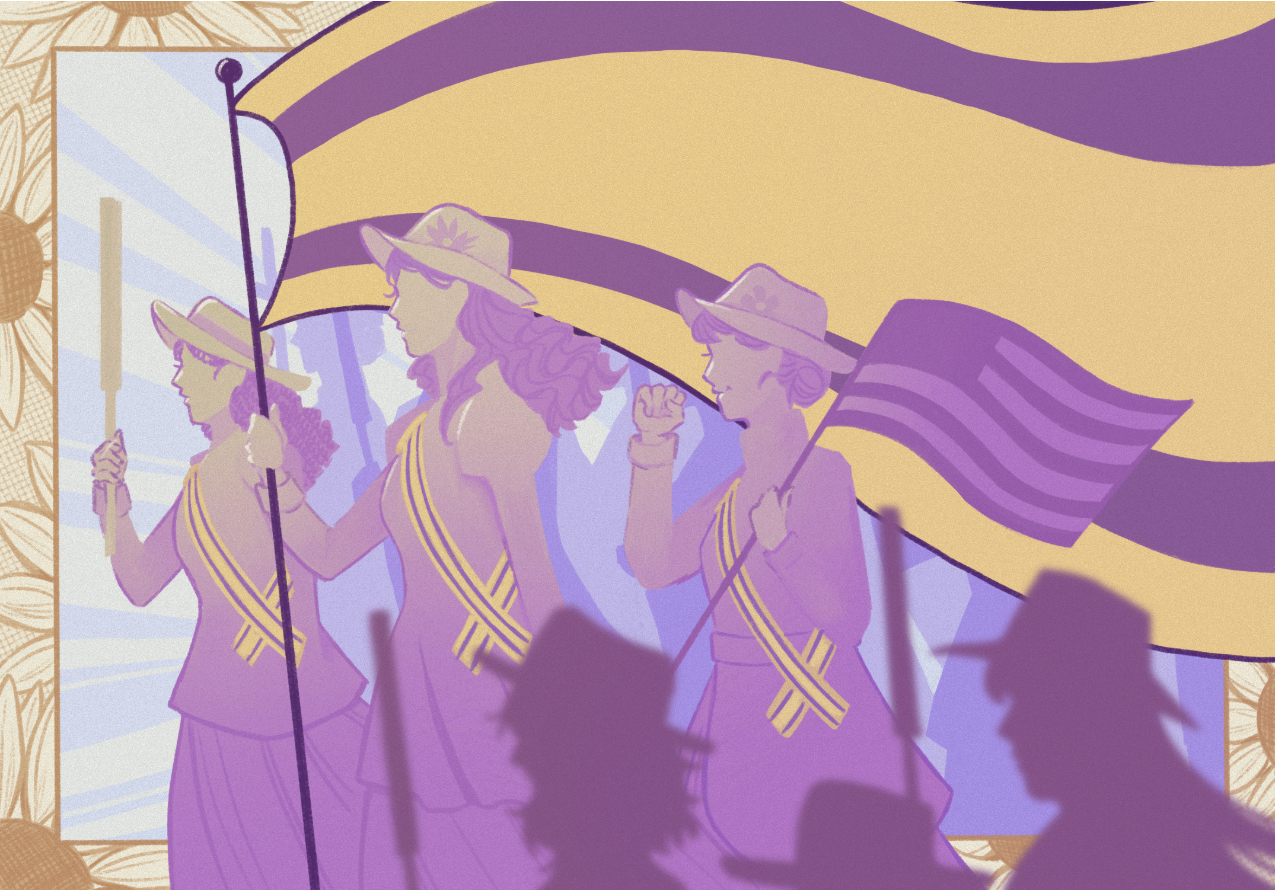
“The women’s suffrage movement made the point to Woodrow Wilson during World War Ⅰ, ‘Why are we fighting for democracy when 50% of the population don’t have the right to vote and don’t have democracy at home?’” Claire Adams, a history teacher at Foothill Technology High School (Foothill Tech), said.
“[The women] would take the speeches that Woodrow Wilson made and use [them] against him. Then, [officers] would charge them with obstructing traffic, thinking that the women would pay it, but they wouldn’t, so then they went to prison,” Adams continued.
“While they were in prison, they then decided to go on a hunger strike [but the prison workers] would then grab these women and strap them to a chair … they would shove a feeding tube down their esophagus, and then they would force feed them,” she said.
Education on the women’s rights movement has often been limited to short summaries and checkpoint dates to be taught in classrooms, leaving little room for the nuances of the painful sacrifices behind the fight for the right to vote. Shaina Taub, a critically acclaimed singer-songwriter and composer, has spoken about grappling with this fact.
“I think it does a disservice to the history of activism to pretend that it was simple … That’s not how movements work,” Taub, in an interview with Global Citizen, said.
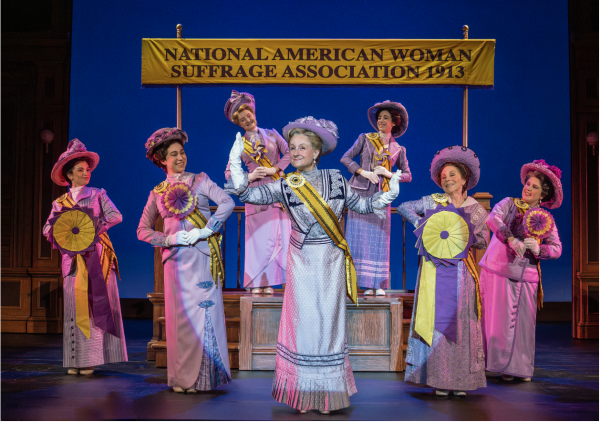
That dissatisfaction ultimately led Taub to create “SUFFS”, a musical retelling of the history of women’s suffrage from the perspective of suffragists themselves, particularly Alice Paul. Rather than presenting the movement as a straightforward march toward the 19th Amendment, the musical lingers on the internal conflict between the women who comprised the movement, emphasizing the personal sacrifices they made as well as their imperfections.
“Women’s suffrage as a historical social movement in our country is not yet really a part of our national imagination … [the suffragists] haven’t been humanized for us,” Taub said.
She also acknowledged that the musical’s themes parallel more contemporary conversations about gender equality and topics like women’s reproductive rights. In “SUFFS’” closing number, “Keep Marching”, the line, “Progress is possible, not guaranteed,” is repeated to underscore the idea that change requires continued attention rather than a single moment of victory.
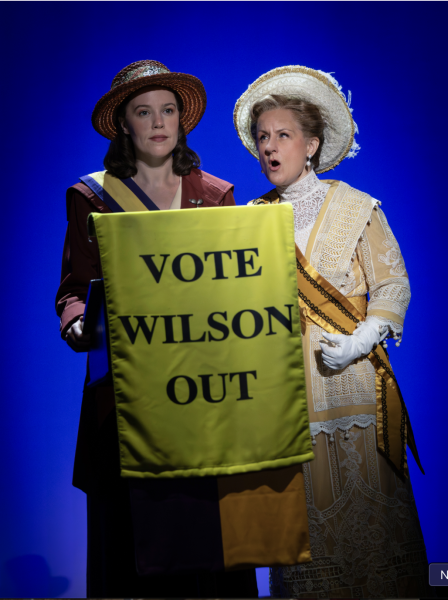
“I was an American Studies major in college, so I knew a little about the suffrage movement; however, suffrage received maybe a paragraph in my history textbooks … It was woefully under-reported,” Marya Grandy, who plays Carrie Chapman Catt in “SUFFS”, said.
For teachers, that lack of depth presents a challenge. With an already extensive curriculum, spending the time to focus on a singular topic is not in the cards for most teachers. “Sadly, I think a lot of people skip [the women’s rights unit], and just focus on the fighting in World War I,” Adams said.
Art integration, including viewing performances of music and dance, in education can influence retention of information for students, allowing them to interact with the real-world facts and fill in the gaps of their traditional education.
In a study where students watched interactive live theater performances, students had “significant gains in content knowledge, increased interest in learning history [and] an increased sense of historical empathy … as a result of the program,” Brian Kisida, Laura Goodwin and Daniel H. Bowen reported in the research paper, “Teaching History Through Theater: The Effects of Arts Integration on Students’ Knowledge and Attitudes”.
“If I stood up in a classroom and said, ‘let me tell you about Alexander Hamilton,’ and just talked at you, you’d be like, ‘oh, this is tedious,’ but if you have amazing songs to sing and the love of the musical draws you in … you [will] remember much more of the history,” Adams said.
Musicals like “Hamilton” and now “SUFFS” extend beyond the theater, circulating on social media through trends and viral clips. As this media becomes a vehicle for education, it transforms into a cultural influence, shaping how young people understand movements like feminism.
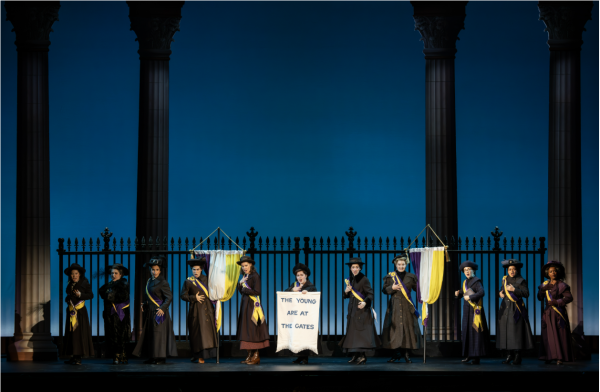
“The idea of feminism has become such a bland topic, a lot of men are … steering away from it for some reason, and I think it’s because they have a negative view on it when they shouldn’t,” Ama Perera ‘28 said. “Normalizing these views means that if more people intake this kind of media, they realize that this is normal, and that inclusivity is … important.”
The position of “SUFFS” in today’s world addresses this gap in education and discussion about the past while encouraging audiences to carry on the torch for a better future, using the story of women’s suffrage as a springboard for continued advocacy.
“I would love audiences to leave ‘SUFFS’ feeling motivated to action — to any kind of forward movement with regard to equality. What our show does so beautifully is demonstrate the idea of thinking globally and acting locally. Every single person can make a difference if they choose to be on the right side of history,” Grandy said.